
Table of Contents
Can a Fever Cause Hair Loss in Hyderabad? Understanding Post-Fever Telogen Effluvium
Noticing sudden, dramatic hair shedding weeks or months after recovering from a high fever is an extraordinarily alarming experience for many Indian men and women. Across Telangana, patients frequently observe handfuls of hair coming out in the shower, on pillowcases, or while combing, often wondering whether can a fever cause hair loss long after the illness itself has resolved.
It is very common to feel confused when hair begins falling out 2 to 3 months after you have already recovered from a severe febrile illness like viral flu, dengue, chikungunya, or typhoid. However, this sudden hair shedding is a well-documented physiological response known as Telogen Effluvium. Understanding the biological connection between body temperature spikes, systemic metabolic stress, and hair follicle cycles can bring reassuring clarity and help guide your path to full hair recovery.

What is Post-Fever Hair Shedding (Telogen Effluvium)?
Yes, a high fever can cause significant hair loss through a clinical condition called Telogen Effluvium (ICD-10: L65.0). Severe febrile stress forces a large percentage of actively growing hair follicles (anagen phase) to abruptly enter a resting state (telogen phase), resulting in diffuse, sudden hair shedding approximately 8 to 12 weeks after the fever spikes.
Post-Fever Hair Fall: Understanding the Timeline
1. Fever or Illness (Day 0) A high fever or illness, such as a viral infection, dengue, or typhoid, can put stress on the body and affect the normal hair growth cycle.
2. Hair Growth Cycle Disruption Physical stress and inflammation can cause some growing hair follicles to enter the resting phase earlier than usual.
3. Hair Shedding Phase (Around 2–3 Months Later) Hair fall may become noticeable several weeks to a few months after the fever.
- Increased hair fall while combing or washing.
- Thinning across the scalp rather than in one specific area.
- Usually no permanent scarring of the scalp.
4. Hair Regrowth Phase (Over the Following Months) As the body recovers, hair follicles gradually return to their normal growth cycle. New hair growth may become noticeable over the next few months.
Why Does Post-Fever Shedding Affect Indian Skin and Hair Types Specifically?
Evaluating hair loss following a febrile episode requires examining the physiological traits of Indian complexions and hair structures. Native Indian complexions generally fall between Fitzpatrick Scale Types III and V. This skin profile features active melanocytes alongside specific hair follicular characteristics: Indian hair typically exhibits higher density per square centimeter but is susceptible to acute metabolic and nutritional disruptions.
Skin Types: Lighter Skin vs. Darker Skin
| Lighter Skin (Fitzpatrick Types I–II) | Darker Skin (Fitzpatrick Types III–V) |
|---|---|
| Contains lower amounts of melanin | Contains higher amounts of melanin |
| More likely to develop sunburn | Generally less likely to develop sunburn |
| Generally has a lower risk of post-inflammatory hyperpigmentation (PIH) | May have a higher risk of post-inflammatory hyperpigmentation (PIH) |
| Sun protection is essential | Sun protection is equally important |
When the body experiences high febrile stress (fever exceeding 101°F or 38.3°C), inflammatory cytokines like Tumor Necrosis Factor-alpha (TNF-$\alpha$) and Interleukin-6 (IL-6) flood the bloodstream. The body prioritizes vital organs (heart, liver, lungs) over non-essential tissues, abruptly cutting off nutrient supply to hair matrix cells.
Several regional health and lifestyle factors in Hyderabad significantly compound post-fever hair shedding:
- Endemic Seasonal Viral Outbreaks: Monsoon and post-monsoon months (July to November) in Hyderabad see recurring spikes in dengue, chikungunya, malaria, and typhoid. These high-grade febrile illnesses induce severe physiological shock that frequently triggers mass Telogen Effluvium 2 to 3 months later.
- Pre-existing Nutritional Deficiencies: A high percentage of Indian adults—particularly women—have underlying sub-clinical deficiencies in Serum Ferritin (stored iron), Vitamin D3, and Vitamin B12. When a febrile illness occurs on top of these baseline deficiencies, the scalp lacks the nutritional reserves required for rapid follicular recovery.
- Hard Water Stress in Suburban Tech Corridors: Washing fragile, shedding hair with hard, mineral-rich groundwater common in areas like Kukatpally, Gachibowli, and Manikonda causes mineral scaling along the hair shaft, increasing physical breakage during an active shedding phase.
What Causes Hair Loss After a Fever?
The human hair growth cycle consists of three distinct phases: Anagen (active growth phase, lasting 2 to 6 years), Catagen (transitional phase, lasting 2 to 3 weeks), and Telogen (resting phase, lasting 2 to 3 months). Under normal conditions, about 85–90% of scalp hair is in the anagen phase, while only 10–15% sits in the telogen phase, resulting in a normal shedding rate of 50 to 100 hairs daily.
Normal Hair Growth Cycle vs. Telogen Effluvium
| Stage | What Happens |
|---|---|
| Normal Hair Growth | Around 85–90% of scalp hairs are in the growing phase (anagen), while a smaller proportion are in the resting phase (telogen). |
| After Fever or Physical Stress | A significant number of growing hair follicles may enter the resting phase earlier than usual. |
| Delayed Hair Shedding | Increased hair fall may become noticeable about 2–3 months after the illness, often affecting the entire scalp. |
A severe fever disrupts this natural balance through several evidence-based pathways:
- Inflammatory Cytokine Surge: High fevers trigger a systemic release of pro-inflammatory cytokines. These signaling proteins act directly on the hair bulb, shutting down cell division (mitosis) in the dermal papilla and forcing growing anagen hair into premature telogen resting phase.
- Micro-Vascular Shutdown: Thermal stress and dehydration during high-grade fevers restrict blood circulation to the superficial capillary networks surrounding scalp hair roots. Lacking oxygen and glucose, hair matrix cells stop multiplying.
- Severe Metabolic Strain and Protein Breakdown: High fevers increase the body’s basal metabolic rate, causing rapid catabolism (protein breakdown). Because hair shafts consist predominantly of keratin (a structural protein), protein depletion starves the hair matrix.
- Stress-Induced Cortisol Release: Emotional stress accompanying hospitalization or severe illness triggers adrenal release of cortisol. High cortisol levels break down essential extracellular matrix components (hyaluronan and proteoglycans) surrounding hair follicles by up to 40%.
- Medication-Induced Hair Shedding: Certain high-dose medications prescribed during acute febrile management—such as specific antibiotics, high-dose NSAIDs, or antimalarials—can independently shift hair roots into the resting phase.
How Does Post-Fever Hair Loss Look and Feel?
Recognizing the distinct clinical characteristics of post-fever Telogen Effluvium helps distinguish it from other forms of hair loss like Androgenetic Alopecia (pattern baldness) or Alopecia Areata:
- Delayed Onset (The 2-to-3-Month Gap): Shedding does not start during the fever itself. It typically begins 8 to 12 weeks after the fever has completely resolved, catching many patients off guard.
- Diffuse, Whole-Scalp Hair Loss: Unlike pattern baldness which affects specific regions (the crown or hairline), Telogen Effluvium causes uniform, diffuse thinning across the entire scalp.
- Large Clumps During Routine Handling: Hair comes out easily in large amounts when washing, oiling, combing, or running fingers through the hair.
- Presence of White Bulbs at the Root: Shed hairs feature a distinct, tiny white club-shaped bulb at the root end. This white tip confirms the hair completed a full telogen resting phase before falling out, rather than snapping from mid-shaft breakage.
- Trichodynia (Scalp Tenderness): Up to 30% of patients experience an uncomfortable crawling, burning, or aching sensation across the scalp preceding or accompanying active hair shedding.
What Can Make Post-Fever Hair Shedding Worse in Indian Hair?
Well-intentioned traditional hair care remedies and common lifestyle habits can inadvertently increase hair breakage and delay follicle recovery:
- Vigorous Scalp Massages with Heavy Hair Oils: Applying thick oils (such as castor or unrefined coconut oil) and massaging forcefully pulls out fragile telogen hairs that are sitting loosely inside hair follicles, increasing immediate hair loss.
- Combing Hair While Wet: Hair shafts absorb water and swell, making them elastic and fragile. Using fine-toothed combs on wet, shedding hair causes mechanical snapping along the shaft.
- Crash Dieting or Strict Caloric Restriction Post-Illness: Attempting aggressive weight-loss diets immediately after recovering from a fever deprives recovering hair follicles of essential amino acids, iron, and zinc.
- Tying Hair into Tight Buns or Braids: Pulling shedding hair into tight hairstyles exerts traction force on weakened hair roots, accelerating hair detachment.
- Ignoring Underlying Anemia or Vitamin Deficiencies: Assuming shedding will resolve on its own without correcting underlying low iron (ferritin) or Vitamin D3 levels can transform temporary post-fever shedding into chronic, long-term hair loss.
Evidence-Based Approach: How to Treat Post-Fever Hair Loss
Managing post-fever Telogen Effluvium involves supporting systemic recovery, restoring key micronutrient levels, and protecting delicate scalp hair follicles.
Hair Fall Recovery: From Diagnosis to Treatment
| Stage | What It Involves |
|---|---|
| 1. Diagnosis | A dermatologist may examine the scalp using trichoscopy and recommend blood tests to check for iron deficiency, vitamin D deficiency, vitamin B12 deficiency, or other possible causes of hair fall. |
| 2. Nutritional Support | A balanced diet can support hair recovery. Iron, vitamin D, or vitamin B12 supplements may be recommended if a deficiency is confirmed. |
| 3. Topical Hair Care | Gentle shampoos and suitable scalp products containing peptides or amino acids may be considered as part of a hair care routine. |
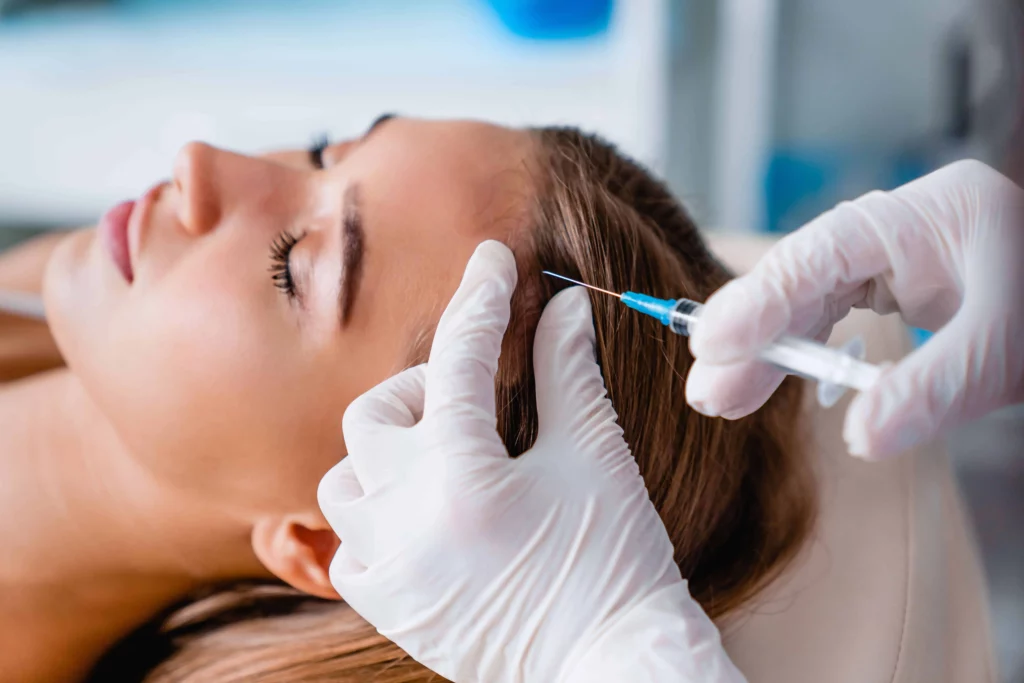
| 4. Advanced Treatments | Depending on the diagnosis, a dermatologist may discuss platelet-rich plasma (PRP), growth factor concentrate (GFC), or low-level laser therapy (LLLT). Suitability and evidence vary by treatment. |
1. Step 1: Comprehensive Blood Panel and Trichoscopy
A dermatologist examines your scalp using a digital trichoscope to confirm the presence of empty hair follicles and dual-hair emergence patterns. Essential blood tests include:
- Serum Ferritin: Target levels should ideally exceed 50–70 ng/mL for optimal hair follicle cell division.
- Vitamin D3 & B12: Essential for hair matrix cell proliferation.
- Thyroid Profile (TSH): Ruling out secondary thyroid dysregulation triggered by systemic illness.
2. Step 2: Targeted Micronutrient and Amino Acid Supplementation
- Elemental Iron & Vitamin C: Correcting iron deficiency to restore oxygen delivery to the dermal papilla.
- Biostimulatory Amino Acids: Supplying L-cysteine and L-methionine—the foundational building blocks of keratin protein.
- Zinc and Biotin: Supporting enzymatic reactions involved in protein synthesis within hair matrix cells.
3. Step 3: Gentle Scalp Care and Barrier Support
- Sulfate-Free Cleansers: Washing the scalp 2 to 3 times weekly with mild, pH-balanced shampoos to remove environmental grime without stripping protective natural lipids.
- Topical Peptide & Botanical Growth Factor Serums: Applying non-greasy, water-based serums containing copper tripeptides or biomimetic peptides to calm scalp micro-inflammation and encourage hair roots to re-enter the anagen growth phase.
4. Step 4: Regenerative In-Clinic Therapies (For Prolonged Shedding)
- Growth Factor Concentrate (GFC) / PRP Therapy: Utilizing autologous growth factors isolated from your own blood to stimulate dormant hair follicles, enhance local blood flow, and speed up recovery. [INTERNAL LINK: GFC hair therapy]
- Low-Level Laser Therapy (LLLT): Applying red-light photobiomodulation (650 nm) to boost cellular ATP production inside hair follicle mitochondria.
Comparison: Post-Fever Telogen Effluvium vs. Other Hair Conditions
The table below outlines how post-fever hair shedding compares with other common hair loss conditions in terms of cause, shedding pattern, diagnostic traits, and expected recovery:
| Hair Condition | Underlying Cause | Shedding Pattern | Key Diagnostic Trait | Expected Recovery Timeline |
| Post-Fever Telogen Effluvium | Febrile shock, systemic cytokines, rapid nutrient depletion. | Diffuse thinning across the entire scalp; high daily shed count. | White club bulb at hair root; shedding starts 2–3 months post-fever. | Self-limiting; full density recovers over 6 to 9 months with proper nutrition. |
| Androgenetic Alopecia (Pattern Hair Loss) | Genetic sensitivity of hair follicles to Dihydrotestosterone (DHT). | Gradual widening of partition line in women; receding hairline/crown in men. | Follicular miniaturization (varying hair shaft thicknesses on trichoscopy). | Progressive condition; requires long-term topical/oral maintenance therapy. |
| Alopecia Areata | Autoimmune attack on hair follicle bulbs by T-lymphocytes. | Sudden appearance of smooth, circular coin-sized bald patches. | “Exclamation mark” hairs present at patch borders under trichoscopy. | Variable; requires targeted anti-inflammatory or immunomodulatory therapy. |
| Anagen Effluvium | Direct toxic damage to rapidly dividing hair matrix cells (e.g., chemotherapy). | Rapid, severe loss of up to 90% of scalp hair within days to weeks. | Broken, dystrophic hair shafts without a normal resting club bulb. | Reversible after toxic agent is cleared; hair regrows over 3 to 6 months. |
| Traction Alopecia | Chronic physical tension on hair roots from tight styles. | Thinning concentrated along the frontal hairline, temples, or nape. | Presence of fringe sign and peripilar keratin casts. | Reversible if caught early; permanent if follicular scarring develops. |
When to Consult a Dermatologist in Hyderabad
While mild post-fever shedding often stabilizes on its own as your body recovers, consulting a qualified medical specialist ensures an accurate diagnosis and rules out underlying nutritional deficiencies.
When to Seek a Dermatologist for Hair Loss
Consider consulting a dermatologist if you notice any of the following signs:
- Hair Shedding Lasts More Than 3 Months: Hair fall continues without noticeable improvement.
- Visible Scalp Thinning: Your hair part is widening, or more scalp skin is becoming visible.
- Persistent Scalp Symptoms: You experience ongoing itching, burning, pain, or tenderness.
- Other Symptoms Develop: Hair loss occurs alongside unusual fatigue, unexplained weight changes, or other health concerns.
- Significant Hair Volume Loss: Your hair density has decreased noticeably over a short period.
Questions to Ask at Your Hair Loss Consultation
Ensure clarity and peace of mind by discussing these practical questions during your initial appointment:
- “Is my hair loss confirmed as acute Telogen Effluvium, or is there co-existing pattern hair loss?”Why it matters: Identifies whether your shedding is a temporary post-fever event or requires long-term pattern hair loss management.
- “Which specific blood tests should I get to check my iron and vitamin levels?”Why it matters: Confirms whether underlying deficiencies in Ferritin, Vitamin D3, or B12 need to be corrected to support hair recovery.
- “Do I need strong topical medications like Minoxidil, or will nutritional support be sufficient?”Why it matters: Acute Telogen Effluvium often resolves with nutritional care alone, whereas Minoxidil is typically reserved for specific clinical indications.
- “Is Growth Factor Concentrate (GFC) or PRP therapy recommended for my degree of hair thinning?”Why it matters: Helps clarify whether regenerative in-clinic procedures will help accelerate your hair density recovery. [INTERNAL LINK: laser toning for pigmentation]
- “What is the expected timeline for my daily hair shedding to slow down?”Why it matters: Establishes clear, realistic expectations, as hair shedding typically takes 6 to 12 weeks to stabilize after initiating care.
Frequently Asked Questions (FAQs)
1. Why did my hair start falling out two months after my fever ended instead of while I was sick?
Hair shedding is delayed because of the natural timing of the hair growth cycle. When a high fever occurs, it pushes growing hair follicles into the telogen resting phase. It takes approximately 8 to 12 weeks for these resting hairs to detach and fall out during daily washing or combing.
2. Is hair loss caused by a fever permanent?
No. Post-fever Telogen Effluvium is a non-scarring, temporary form of hair loss. Because the underlying hair follicle stem cells remain healthy and intact, hair roots re-enter the active growth (anagen) phase once systemic recovery is complete and nutrient levels are restored.
3. How long does post-fever hair shedding usually last?
Daily shedding typically peaks for 2 to 3 months before gradually slowing down. Once shedding stabilizes, visible hair regrowth and density restoration take approximately 6 to 9 months as new hair shafts grow at a natural rate of about 1 centimeter per month.
4. Which fevers are most likely to cause severe hair loss in India?
High-grade, systemic febrile illnesses—such as dengue fever, chikungunya, typhoid, severe influenza, and malaria—are particularly known for triggering Telogen Effluvium due to the high fever spikes and significant metabolic stress they cause.
5. Should I stop washing my hair if I see large amounts falling out in the shower?
No. Washing your hair does not cause healthy, growing hair to fall out. The hairs shed during washing are telogen hairs that had already detached from the follicle base weeks earlier. Avoiding hair washing leads to sebum build-up and scalp inflammation, which can worsen hair loss.
6. Can taking daily biotin supplements alone stop post-fever hair shedding?
Biotin alone is rarely sufficient. Post-fever shedding is primarily driven by systemic inflammatory shock and depleted iron stores (Serum Ferritin). A comprehensive approach correcting iron, Vitamin D3, and amino acid levels is far more effective than high-dose biotin alone.
7. Are in-clinic GFC hair treatments safe and effective for post-fever hair thinning?
Yes. Growth Factor Concentrate (GFC) therapy utilizes autologous growth factors isolated from your own blood to nourish dormant hair roots, improve local blood circulation, and help speed up recovery during post-fever Telogen Effluvium.
8. How do I schedule a diagnostic hair loss evaluation in West Hyderabad?
You can book a diagnostic assessment with a board-certified dermatologist through official clinic contact channels. For instance, consultations at a specialized dermatology practice in West Hyderabad can be requested at drshowryagadde.com or via WhatsApp at +91 7599741111.
Final Thoughts: Reassurance and Patient Empowerment
If you are currently experiencing hair loss following a high fever, the most important takeaway is reassurance: post-fever Telogen Effluvium is temporary, non-scarring, and fully reversible. Your hair follicles are not dead; they are simply resting after a period of high metabolic stress.
Focus on a steady, supportive approach: eat a protein-rich diet, address underlying iron or vitamin deficiencies under medical guidance, handle shedding hair gently, and avoid harsh scalp treatments. Partnering with an experienced dermatologist ensures an accurate diagnosis, protects your scalp health, and helps your hair recover its natural density over time.

Dr. Showrya Gadde, MBBS, MD (Dermatology), is a board-certified dermatologist and fellowship-trained aesthetic clinician in Kondapur, Hyderabad. She is best known for pico laser, Cosmelan peel, Botox and acne scar treatments. Every treatment she offers is evidence-based and customised for Indian skin.