Table of Contents
Why is Your Skin Getting Darker Without Sun Exposure in Hyderabad?
Noticing your face, neck, or body darkening despite staying indoors and avoiding direct sunlight is a frequent and distressing concern, particularly among Indian women and men. Many patients in Hyderabad meticulously apply daily skincare products only to find dark patches expanding across their cheeks, forehead, or neck creases. Observing your skin getting darker without sun exposure can feel confusing, as traditional advice often attributes all pigmentation solely to sunburns and outdoor sun exposure.
However, skin pigmentation is a complex biological response managed by internal endocrine, metabolic, and vascular signaling systems. In Indian skin, pigment-producing cells do not require direct ultraviolet radiation to synthesize excess melanin; internal hormonal shifts, radiant indoor heat, metabolic insulin resistance, and cutaneous inflammation can independently trigger significant hyperpigmentation. This clinical guide explains the internal mechanisms behind non-solar skin darkening and outlines evidence-based management strategies for patients in Hyderabad.
What Causes Skin Darkening Without Direct Sun Exposure?
Non-solar hyperpigmentation (ICD-10: L81.8) refers to skin darkening caused by internal physiological triggers rather than direct ultraviolet radiation. It develops when melanocytes (pigment-producing cells) are activated by circulating endocrine hormones, high systemic insulin levels, radiant ambient heat, sub-clinical micro-inflammation, or High-Energy Visible (HEV) blue light from digital displays.
Non-Solar Melanocyte Activation Pathways
Skin pigmentation can increase through several biological pathways, even when direct sun exposure is not the only contributing factor. Hormonal changes, inflammation, metabolic factors, and certain forms of light or heat exposure may contribute, depending on the pigmentation disorder.
How Melanin Production Can Increase
From contributing triggers to visible pigmentation
Stage 1 — Contributing Triggers
- Hormonal influences
- Metabolic factors, including insulin resistance in certain conditions
- Visible light, including high-energy visible (HEV) light, particularly in melasma
- Heat and inflammation, which may aggravate pigmentation in some individuals
Stage 2 — Melanocyte Signalling
- Signals activate pathways that regulate melanin production.
- Tyrosinase, an enzyme involved in melanin synthesis, helps convert precursor molecules into melanin.
- Melanocortin-1 receptors (MC1R) are one part of the signalling system that regulates pigmentation.
Stage 3 — Increased Melanin Synthesis
Melanocytes produce melanin within specialized structures called melanosomes. The amount and type of pigment produced depend on the biological signals and individual characteristics.
Stage 4 — Pigment Transfer & Visible Darkening
Melanosomes are transferred to surrounding keratinocytes in the epidermis. Increased or uneven pigment distribution can contribute to visible skin darkening or localized hyperpigmentation.
Why Does Non-Solar Darkening Affect Indian Skin Specifically?
Evaluating non-solar pigmentation requires understanding the distinct physiological traits of Indian skin. Complexions native to the Indian subcontinent typically fall between Fitzpatrick Scale Types III and V. This skin classification features larger, highly active melanocytes located along the basal layer of the epidermis.
Lighter Skin
Fitzpatrick types I–II
- Generally lower baseline melanin
- Higher tendency to sunburn
- PIH can occur, but risk and persistence vary by individual and cause
Darker Skin
Often types IV–VI
- Generally higher baseline melanin
- Lower average sunburn susceptibility, but UV damage remains possible
- PIH may be more noticeable or persist longer after inflammation or procedures
While higher baseline melanin protects against premature photo-aging, it makes the skin reactive to internal signals. When triggered by hormonal fluctuations or metabolic shifts, these active melanocytes synthesize dark eumelanin rapidly, leading to stubborn patches.
Several lifestyle and environmental factors specific to Hyderabad exacerbate non-solar skin darkening:
- High Prevalence of Metabolic Syndrome and PCOS: Hyderabad has a high incidence of metabolic syndrome, type-2 diabetes, and Polycystic Ovary Syndrome (PCOS). High circulating insulin directly stimulates keratinocyte proliferation and melanocyte output, causing velvety darkening along the neck and underarms (acanthosis nigricans).
- Radiant Heat from Domestic and Industrial Environments: Summer temperatures in Hyderabad regularly exceed 40°C. Radiant ambient heat and indoor kitchen heat cause facial vasodilation, releasing inflammatory cytokines that trigger melasma without direct sunlight.
- Extended IT Corridor Screen Exposure: Tech professionals in Madhapur, Gachibowli, and HITEC City spend 8 to 12 hours daily facing high-intensity digital screens. High-Energy Visible (HEV) blue light penetrates into the deep dermis, stimulating melanocytes to produce persistent pigmentation in Fitzpatrick Types III–V skin.
What Causes Skin to Darken Without Sun Exposure?
Internal skin darkening stems from several distinct medical, hormonal, and environmental pathways:
- Insulin Resistance and Acanthosis Nigricans (ICD-10: L83): Elevated circulating insulin levels bind to Insulin-like Growth Factor 1 (IGF-1) receptors on skin cells. This binding causes epidermal hyper-proliferation and hyperpigmentation, producing dark, velvety plaques along the neck, axillae, knuckles, and inner thighs.
- Endocrine and Hormonal Fluctuations (Melasma, ICD-10: L81.1): Estrogen and progesterone bind directly to receptors on human melanocytes. Hormonal shifts from oral contraceptives, pregnancy, thyroid disorders, or PCOS stimulate pigment production across the cheeks, upper lip, and forehead independently of sun exposure.
- High-Energy Visible (HEV) Blue Light and Indoor Radiation: Modern LED lighting and digital screens emit HEV blue light (400–500 nm). Studies demonstrate that blue light induces long-lasting hyperpigmentation in darker skin tones by forming a stable opsin-3 pigment-producing complex.
- Radiant Indoor Thermal Exposure: Heat alone induces cutaneous micro-inflammation and blood vessel dilation. Dermal endothelial cells release Vascular Endothelial Growth Factor (VEGF), which directly stimulates melanocytes to synthesize melanin.
- Post-Inflammatory Hyperpigmentation (PIH, ICD-10: L81.0): Sub-clinical inflammation caused by harsh indoor cosmetics, over-exfoliation with physical scrubs, or friction from tight clothing triggers a protective melanin surge in Indian skin.
- Medication-Induced Pigmentation: Certain systemic drugs—including specific antihypertensives, oral antidiabetics, non-steroidal anti-inflammatory drugs (NSAIDs), and psychiatric medications—can induce diffuse skin darkening as a drug-related side effect.
How Does Non-Solar Skin Darkening Look and Feel?
Recognizing the visual features of non-solar pigmentation helps distinguish metabolic conditions from environmental sun damage:
- Velvety, Thickened Plaques (Acanthosis Nigricans): Symmetrical, dark brown or black velvety patches appearing along neck creases, underarms, groin folds, and knuckles.
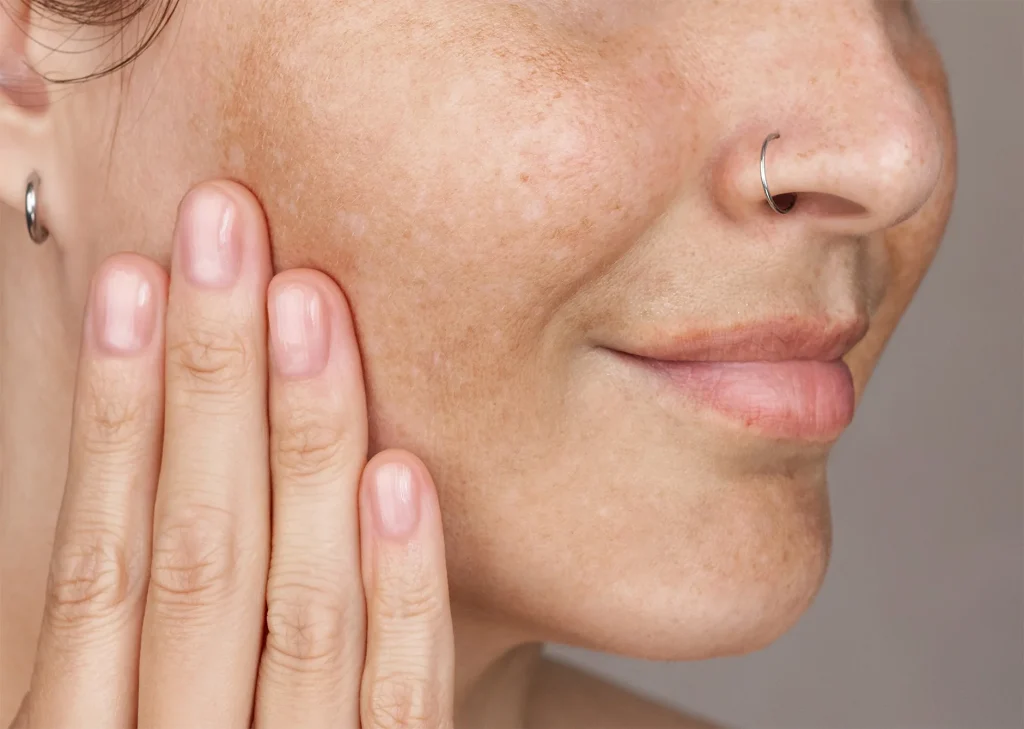
- Symmetrical Facial Patches (Hormonal Melasma): Brown or grayish macules distributed symmetrically across the central cheeks, upper lip, and forehead, maintaining dark intensity despite staying indoors.
- Diffuse Neck and Perioral Darkening: Darkening concentrated around the mouth (perioral hyperpigmentation) or entire neck, often linked to friction, perfume contact dermatitis, or metabolic shifts.
- Smooth, Non-Itchy Texture: Most metabolic and endocrine hyperpigmentation presents smoothly without active scaling, hives, or physical pain—unlike acute allergic rashes or fungal infections.
What Can Make Non-Solar Darkening Worse in Indian Skin?
Unintentional home remedies and lifestyle habits can accelerate internal pigment production in melanin-rich skin:
                  NON-SOLAR PIGMENTATION AGGRAVATORS
┌──────────────────────────────────────────────────────────────────────────┐
│ [ ] High-Glycemic Dietary Patterns (Spikes insulin & IGF-1 receptors)   │
│ [ ] Abrasive Physical Scrubbing (Triggers friction-induced PIH)          │
│ [ ] Harsh DIY Kitchen Ingredients (Lemon juice & baking soda burns)      │
│ [ ] Omitting Tinted Sunscreen Indoors (Fails to block blue HEV light)    │
│ [ ] Ignoring Underlying Metabolic Markers (Unchecked PCOS/Insulin)       │
└──────────────────────────────────────────────────────────────────────────┘
- Consuming High-Glycemic Diets: Diets high in refined sugars, processed carbohydrates, and sweetened beverages cause rapid insulin spikes, accelerating acanthosis nigricans along skin folds.
- Aggressive Physical Friction: Vigorous scrubbing with loofahs, pumice stones, or coarse walnut scrubs to “wash away” dark neck patches damages the stratum corneum, worsening friction-induced post-inflammatory hyperpigmentation.
- Applying Irritating Kitchen Remedies: Applying raw lemon juice, apple cider vinegar, or baking soda damages the skin’s acid mantle, causing chemical micro-burns that darken under indoor heat.
- Ignoring Indoor Blue Light Protection: Using clear, non-tinted sunscreens that lack iron oxides leaves the skin unprotected against HEV blue light emitted by indoor monitors and lighting.
- Abruptly Stopping Prescribed Maintenance Regimens: Discontinuing topical depigmenting creams once surface spots fade allows hyperactive melanocytes to resume rapid pigment synthesis.

Evidence-Based Approach: Managing Non-Solar Pigmentation
Managing skin darkening caused by internal factors requires a multi-layered approach that addresses metabolic health, daily photoprotection, and targeted medical procedures:
| Treatment component | Important consideration |
|---|---|
| Dermoscopy | Helps assess pigment patterns but does not replace clinical diagnosis. |
| Metabolic testing | Insulin, PCOS, or other tests should be selected according to symptoms and clinical indications; they are not necessary for every pigmentation concern. |
| Tinted sunscreen | Iron oxides can improve visible-light protection, which may be useful in melasma. |
| Lasers and peels | Not first-line or suitable for every patient; irritation and PIH are possible, particularly in darker skin tones. |
| Maintenance | Consistent sun protection and individualized topical care can help reduce recurrence. |
1. Metabolic Evaluation and Lifestyle Modification
- Endocrine Screening: Checking fasting insulin, HbA1c, lipid profiles, and pelvic ultrasound (for PCOS) to identify underlying drivers of acanthosis nigricans.
- Low-Glycemic Nutrition: Adopting a diet rich in complex grains, green vegetables, and lean proteins helps stabilize circulating insulin levels and reduces skin cell hyper-proliferation.
2. Daily Indoor Blue Light and Radiant Heat Protection
- Iron-Oxide Tinted Mineral Sunscreens: Formulated with Zinc Oxide and Iron Oxides. Iron oxides are clinically proven to block HEV blue light, preventing melanocyte activation during long screen hours.
- Application Protocol: Apply broad-spectrum SPF 30–50 PA++++ tinted sunscreen every morning, even when working entirely indoors.
3. Dermatologist-Prescribed Topical Formulations
- Tyrosinase Inhibitors: Topical formulations containing azelaic acid, kojic acid, arbutin, or tranexamic acid regulate tyrosinase—the enzyme responsible for melanin production.
- Keratolytic Agents for Acanthosis Nigricans: Prescription creams containing low-concentration lactic acid, urea, or tretinoin help thin hyper-keratotic, velvety patches on the neck and body folds.
4. In-Clinic Procedural Options
- Low-Fluence Q-Switched Nd:YAG Laser Toning: Delivers low-energy photo-acoustic pulses (1064 nm wavelength) to fragment dermal melanin without generating excessive heat that could trigger rebound hyperpigmentation. [INTERNAL LINK: laser toning for pigmentation]
- Superficial Chemical Peels: Utilizing gentle alpha/beta-hydroxy acids (mandelic, lactic, or salicylic acid) to exfoliate darkened surface layers safely.
Comparison: Causes and Treatments for Non-Solar Darkening
The table below outlines common causes of non-solar skin darkening, their physiological mechanisms, safety considerations for Indian skin, and standard management protocols:
| Clinical Condition | Primary Mechanism | Primary Affected Areas | PIH Risk in Darker Skin | Typical Management Protocol |
| Acanthosis Nigricans | Systemic insulin resistance binding to epidermal IGF-1 receptors. | Posterior neck, axillae, knuckles, inner thighs. | Moderate (Aggressive scrubbing worsens dark patches). | Weight management, low-glycemic diet, topical keratolytics (urea/lactic acid). |
| Hormonal Melasma | Estrogen/progesterone receptors stimulating melanocytes. | Cheeks, upper lip, forehead, bridge of nose. | High (Requires conservative low-heat procedures). | Tinted iron-oxide sunscreens, azelaic acid, low-fluence laser toning. [INTERNAL LINK: Hyderabad skin clinic] |
| HEV Blue Light Pigmentation | Screen-emitted blue light inducing stable opsin-3 pigment complexes. | Central face, periorbital area, forehead. | Low to Moderate. | Daily indoor tinted mineral sunscreen containing iron oxides. |
| Friction-Induced PIH | Mechanical rubbing damaging basal keratinocytes and releasing melanin. | Neck folds, inner thighs, underarms, waistlines. | Very High (Physical scrubs accelerate darkening). | Wear loose cotton clothing, avoid physical scrubs, apply barrier-repair topicals. |
| Drug-Induced Darkening | Systemic drug metabolites accumulating in dermal macrophages. | Sun-exposed face, hands, mucosal surfaces, nails. | Variable. | Medication review with prescribing physician, broad-spectrum sun protection. |
When to Consult a Dermatologist in Hyderabad
While broad-spectrum photoprotection supports general skin health, persistent or expanding non-solar skin darkening warrants a comprehensive evaluation by a qualified medical specialist.
Clinical Assessment & Management Flow
Examine → Investigate when indicated → Personalize → Monitor
Stage 1 — Dermatological Examination
- Assess the location, pattern, colour, and duration of pigmentation.
- Use dermoscopy when helpful to examine pigment patterns and skin structures.
- Consider relevant diagnoses, including melasma, post-inflammatory hyperpigmentation, and acanthosis nigricans.
Stage 2 — Targeted Medical Investigations
- Review medical history, medications, hormonal symptoms, and metabolic risk factors.
- If acanthosis nigricans or metabolic risk is suspected, a clinician may consider tests such as fasting glucose or HbA1c.
- Fasting insulin and HOMA-IR are not routine tests for every pigmentation concern and require careful clinical interpretation.
Stage 3 — Individualized Management Plan
- Establish a gentle skincare routine and appropriate sun protection.
- Select topical treatments according to the diagnosis, skin sensitivity, and risk of irritation.
- Consider chemical peels only when appropriate and performed by a qualified professional.
- Address relevant dietary or metabolic concerns without assuming they are the cause of every pigmentation disorder.
Stage 4 — Structured Monitoring
- Track changes using standardized photographs and clinical review.
- Monitor treatment tolerance, irritation, and recurrence.
- Follow up on abnormal metabolic test results with the appropriate healthcare professional.
Clinical Practice Highlight:
Patients seeking evidence-based management for persistent or non-solar skin darkening in West Hyderabad can visitDr. Showrya Gadde’s clinic in Kondapur. As a board-certified dermatologist (MBBS, MD Dermatology) with fellowship training in aesthetic medicine, Dr. Gadde conducts comprehensive diagnostic assessments using dermoscopy and metabolic evaluations—creating customized treatment plans that prioritize safety and long-term skin health for Indian skin types. [INTERNAL LINK: GFC hair therapy]
Consultations can be scheduled via drshowryagadde.com or WhatsApp +91 7599741111.
Questions to Ask at Your Consultation
Ensure clarity and safety by discussing these direct questions during your appointment:
- “Is my skin darkening driven by internal metabolic factors, hormonal shifts, or external friction?”Why it matters: Identifies the root cause so treatment addresses internal health rather than relying solely on surface creams.
- “Should I undergo blood tests for fasting insulin, HbA1c, or hormonal markers?”Why it matters: Helps detect underlying conditions like insulin resistance or PCOS that require medical management.
- “Does my daily sunscreen contain iron oxides to shield against indoor HEV blue light?”Why it matters: Confirms your sunscreen provides adequate protection against digital screens and indoor lighting.
- “Are the proposed chemical peels or laser treatments safe for my Fitzpatrick skin type?”Why it matters: Verifies that procedures use gentle settings designed to protect Indian skin from post-inflammatory hyperpigmentation.
- “What lifestyle and dietary changes will help support my clinical skin treatment?”Why it matters: Ensures long-term results by combining medical treatments with appropriate dietary and lifestyle care.
Frequently Asked Questions (FAQs)
1. Can screen time from laptops and smartphones really darken my skin?
Yes. Digital screens emit High-Energy Visible (HEV) blue light (400–500 nm), which penetrates into the deeper layers of the dermis and stimulates melanocytes to produce melanin in Fitzpatrick Types III–V skin. Tinted mineral sunscreens containing iron oxides help block blue light.
2. Why is the skin on my neck getting thick and dark even though I scrub it daily?
Thickened, dark skin along neck creases is typically acanthosis nigricans—a condition linked to systemic insulin resistance rather than poor hygiene. Aggressive scrubbing creates friction that damages the skin barrier, worsening post-inflammatory hyperpigmentation.
3. Can stress cause skin to darken without sun exposure?
Yes. Chronic psychological stress elevates corticotropin-releasing hormone (CRH) and cortisol. These hormones bind to melanocortin receptors on skin melanocytes, increasing pigment synthesis independently of sun exposure.
4. Is acanthosis nigricans permanent, or can it be reversed?
Acanthosis nigricans can be significantly improved. Fading dark patches requires addressing underlying insulin resistance through low-glycemic nutrition, exercise, weight management, and dermatologist-prescribed topical keratolytic creams (such as urea or lactic acid).
5. Why does my skin darken during pregnancy or while taking oral contraceptives?
Elevated levels of estrogen and progesterone during pregnancy or hormonal medication use stimulate melanocytes directly, lowering the threshold for pigment production and triggering facial melasma without direct sunlight.
6. Are chemical peels safe for dark patches on the neck and body folds?
Yes, when chosen and administered by an experienced dermatologist. Mild hydroxy acid peels (such as mandelic or lactic acid) help exfoliate hyper-keratotic tissue safely without causing thermal injury or hyperpigmentation.
7. Why do clear sunscreens fail to prevent indoor skin darkening?
Clear, non-tinted sunscreens protect against UVA and UVB rays but lack iron oxides—the active ingredient required to reflect visible HEV blue light emitted by indoor monitors and LED lighting.
8. How do I schedule a diagnostic evaluation for skin darkening in West Hyderabad?
You can book an assessment with a board-certified dermatologist through official clinic contact channels. For instance, consultations at a specialized practice in West Hyderabad can be requested at drshowryagadde.com or via WhatsApp at +91 7599741111.

Final Thoughts: Addressing Root Causes for Lasting Clarity
Observing your skin getting darker without sun exposure indicates that your skin is responding to internal biological signals. Rather than trying to scrub away dark patches or relying on generic surface creams, focus on an evidence-based approach: evaluate metabolic health, apply tinted iron-oxide sunscreen daily, manage indoor heat exposure, and avoid physical friction.
Partnering with a qualified dermatologist ensures an accurate diagnosis, helps manage underlying hormonal or metabolic factors, and protects your skin barrier for long-term health and clarity.

Dr. Showrya Gadde, MBBS, MD (Dermatology), is a board-certified dermatologist and fellowship-trained aesthetic clinician in Kondapur, Hyderabad. She is best known for pico laser, Cosmelan peel, Botox and acne scar treatments. Every treatment she offers is evidence-based and customised for Indian skin.