
Table of Contents
Top 5 Dermatologist in Hyderabad: A Clinical Guide for Patients
Finding specialist dermatological care across expanding urban hubs like Kondapur, HITEC City, Jubilee Hills, and Gachibowli is a critical health priority for many residents. Patients seeking a top 5 dermatologist in Hyderabad often face a crowded landscape of commercial aesthetic centers, beauty salons, and medical clinics. However, evaluating skin and hair care requires a strict medical lens rather than a cosmetic one.
Skin conditions like recalcitrant melasma, post-inflammatory hyperpigmentation (PIH), cystic acne, and telogen effluvium hair shedding affect a large percentage of Indian men and women. Entrusting these complex physiological concerns to unqualified practitioners or centers using non-certified energy devices can cause severe side effects, including permanent scarring, thermal burns, and paradoxical worsening of pigmentation. This guide outlines the objective medical criteria, qualifications, and diagnostic standards needed to identify leading dermatological expertise in Hyderabad.
What Defines a Leading Dermatologist in Hyderabad?
A leading dermatologist in Hyderabad is a medical specialist holding a recognized postgraduate degree (MD, DNB, or DDVL) in Dermatology, Venereology, and Leprosy registered with the National Medical Commission (NMC). Key benchmarks include verified expertise in treating Fitzpatrick Types III–V skin, reliance on US-FDA approved technologies, active IADVL membership, and direct physician-led consultations.
Qualified Dermatology Practice: Key Standards
A qualified dermatology practice combines recognised medical training, appropriate safety procedures, a broad clinical scope, and treatment plans tailored to each patient’s needs.
| Core Standard | Key Requirements | Purpose |
|---|---|---|
| Qualified Dermatologist | MBBS followed by a recognised postgraduate dermatology qualification, such as MD, DNB, or DDVL, with appropriate registration | Supports qualified medical assessment and treatment |
| Clinical Scope | Medical dermatology, skin and hair conditions, and appropriate procedural or aesthetic care | Addresses a range of dermatological concerns |
| Safety Protocols | Appropriate equipment clearance, patch testing when indicated, infection-control procedures, and doctor-led clinical assessment | Helps reduce treatment-related risks |
| Local Adaptation | Consideration of skin phototypes, UV exposure, humidity, lifestyle, and individual skin concerns | Helps tailor treatment to the patient’s environment and needs |
Understanding the Indian Skin Context: Physiology, Climate, and Lifestyle
Selecting a top-tier dermatologist requires finding a consultant who deeply understands the biological characteristics of Indian skin. Complexions native to the Indian subcontinent typically fall between Fitzpatrick Scale Types III and V. This skin classification features larger, highly active melanocytes—the pigment-producing cells located along the basal layer of the epidermis.
Skin Types and Pigmentation Risk: Lighter vs. Darker Skin
Skin responds differently to sunlight and dermatological procedures depending on melanin levels and individual skin characteristics. The Fitzpatrick scale classifies skin into six types based on its response to UV exposure.
| Feature | Lighter Skin (Fitzpatrick I–II) | Darker Skin (Fitzpatrick III–V) |
|---|---|---|
| Melanin | Generally lower melanin levels | Generally higher melanin levels |
| Sunburn Response | More likely to burn easily | May burn less easily, but sunburn is still possible |
| Post-Inflammatory Hyperpigmentation (PIH) | PIH can occur after inflammation or skin injury | PIH is often more noticeable and may persist longer |
| Treatment Considerations | Sun protection and appropriate treatment settings are important | Careful treatment selection and settings can help reduce pigmentation complications |
While higher melanin density provides built-in protection against premature photo-aging and skin cancers, it also makes the skin hyper-reactive to trauma or inflammation. Aggressive treatments, incorrect laser wavelengths, or unbuffered chemical peels can trigger post-inflammatory hyperpigmentation (PIH), leaving dark, persistent marks that are far more difficult to treat than the initial concern.
Local climate and lifestyle factors in Hyderabad create distinct challenges for skin health:
- High Ambient Solar UV Index: Hyderabad experiences high UV radiation throughout most of the year. Unprotected exposure—even for short daily periods—triggers melanocyte-stimulating hormone (MSH), causing melasma (ICD-10: L81.1) and post-acne dark marks.
- Humid Microclimates and Pollution: Hot, humid summers followed by monsoon microclimates increase sebum production. Excess oil traps atmospheric dust and industrial particulate matter ($PM_{2.5}$), clogging pores and exacerbating inflammatory acne vulgaris (ICD-10: L70.0).
- IT Corridor Stress Factors: Extended hours spent under artificial blue light, high occupational stress, and continuous indoor air conditioning across Madhapur, Gachibowli, and Kondapur impair cutaneous barrier function, driving adult hormonal breakouts and telogen effluvium hair shedding (ICD-10: L65.0).
5 Essential Clinical Criteria for Evaluating Dermatologists
When evaluating specialist care in Hyderabad, use these five objective medical standards to assess practitioners:
1. Verification of Recognized Postgraduate Medical Credentials
Confirm that your consultant holds a recognized postgraduate medical degree in dermatology registered with the State Medical Council or National Medical Commission (NMC):
- MD (Doctor of Medicine) in Dermatology, Venereology, and Leprosy
- DNB (Diplomate of National Board) in Dermatology
- DDVL (Diploma in Dermatology, Venereology, and Leprosy)
Be cautious of providers using broad titles like “cosmetologist,” “trichologist,” or “aesthetic physician” without an underlying MBBS and postgraduate medical degree in dermatology. Short weekend certification courses do not substitute for three years of rigorous medical residency training in skin pathology. Active membership in the IADVL (Indian Association of Dermatologists, Venereologists and Leprologists) serves as an additional mark of professional standing.
2. Specialized Protocols for Fitzpatrick Skin Types III–V
Melanin-rich skin requires conservative treatment protocols. Experienced dermatologists adjust energy parameters—such as fluence, pulse duration, and contact cooling—when operating lasers to prevent thermal injury and post-procedure hyperpigmentation on darker skin tones.
3. Investment in US-FDA Approved Medical Technology
Aesthetic energy devices (lasers, radiofrequency systems, ultrasound platforms) are precise medical instruments. Established practices invest in equipment cleared by the US-FDA (United States Food and Drug Administration) or equivalent international regulatory bodies. Certified technology ensures stable energy delivery, whereas uncertified, low-cost clone devices carry a significantly higher risk of thermal burns and permanent scarring.
4. Direct Physician-Led Consultation and Delivery
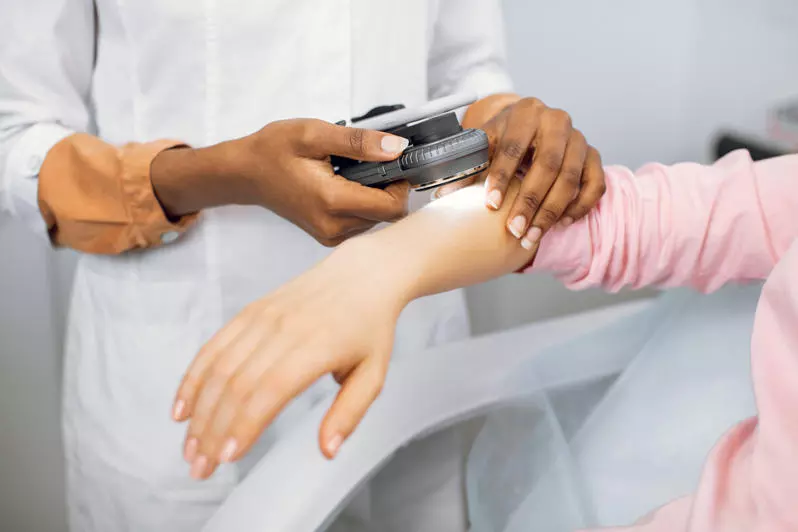
In an ethical medical practice, a board-certified dermatologist personally performs your initial evaluation, diagnostic examination (such as dermoscopy or Wood’s lamp analysis), and treatment planning. While trained clinical assistants may help during procedures under direct supervision, device parameter selection and advanced procedures should be managed directly by the doctor.
5. Evidence-Based Diagnostic Approach Over Sales Packages
Avoid clinics that focus on selling standardized treatment packages before completing a thorough diagnostic evaluation. A proper consultation assesses medical history, hormonal status (such as checking for PCOS in women with adult acne), current skincare habits, and lifestyle factors before recommending specific procedures.
Clinical Practice Highlight:
Patients seeking evidence-based dermatological care in West Hyderabad can visitDr. Showrya Gadde’s clinic in Kondapur. As a board-certified dermatologist (MBBS, MD Dermatology) with fellowship training in aesthetic medicine, Dr. Gadde provides comprehensive management for medical skin conditions like melasma and recalcitrant acne, as well as advanced procedures including Growth Factor Concentrate (GFC) hair therapy and targeted laser toning.
Consultations can be scheduled via drshowryagadde.com or WhatsApp +91 7599741111.
What to Ask at Your Clinical Dermatology Consultation
Empower yourself during your initial visit by asking these specific, practical questions to evaluate the quality of care:
Dermatology Consultation Checklist
Use this checklist during your dermatology consultation to understand your diagnosis, treatment options, potential risks, and expected recovery.
Questions to Ask Your Dermatologist
- Exact Diagnosis: What is my specific clinical diagnosis, and what is causing my symptoms?
- Device Suitability: Is the recommended device appropriate for my skin type, particularly Fitzpatrick Types IV–V? What evidence supports its safety and effectiveness for my condition?
- Doctor Involvement: Will the dermatologist perform the procedure directly or supervise it? Who will carry out each step?
- Side Effects and PIH Risk: What side effects should I expect, and what is my risk of post-inflammatory hyperpigmentation (PIH)?
- Number of Sessions: How many sessions may I need, and what results are realistically achievable?
- Recovery and Aftercare: How long is the expected recovery period? What skincare, sun protection, or activity restrictions will I need?
- Maintenance: Will I need follow-up appointments or maintenance sessions to sustain the results?
- “What is my specific clinical diagnosis, and what are the underlying contributing factors?”Why it matters: Identifies the exact condition—such as distinguishing dermal melasma from post-inflammatory hyperpigmentation or hormonal acne from comedonal acne—so treatment targets the root cause.
- “Is the proposed laser or device US-FDA approved for Indian skin types?”Why it matters: Confirms the technology has undergone safety testing for darker skin tones.
- “Who will directly perform my treatment procedure?”Why it matters: Ensures a qualified dermatologist manages device parameters and oversees your care, rather than delegating the treatment entirely to assistants.
- “Will a patch test be performed prior to full-session treatments?”Why it matters: Helps detect potential skin sensitivities and prevents adverse reactions like thermal burns or post-procedure darkening.
- “What is the realistic timeline and expected outcome for my treatment plan?”Why it matters: Establishes clear expectations, as medical skin conditions typically require several months of consistent care.
- “What post-procedure care and sun protection steps should I follow?”Why it matters: Proper post-treatment care—especially applying broad-spectrum sunscreen and avoiding direct heat—is vital to prevent hyperpigmentation in Hyderabad’s warm climate.
- “What are the total estimated costs, including required home care products?”Why it matters: Provides financial clarity so you can plan for complete treatment cycles without unexpected expenses.
Clinical Breakdown of Common Dermatological Conditions & Protocols
Standard clinical care pathways follow structured, step-by-step evidence-based guidelines:
| Stage | Key Steps | Purpose |
|---|---|---|
| 1. Diagnosis | Clinical examination, dermoscopy when indicated, and laboratory tests if necessary | Identify the skin condition and determine its likely cause |
| 2. Preparation | Prescribed priming creams when appropriate, skin-barrier repair, and sun protection | Prepare the skin and help reduce irritation or treatment-related risks |
| 3. Treatment | Suitable in-clinic procedures, targeted laser treatments, or medical therapies | Address the diagnosed condition using an appropriate treatment approach |
| 4. Maintenance | Prescribed topical skincare, ongoing sun protection, and periodic reviews | Help maintain improvement and monitor for recurrence or side effects |
1. Hyperpigmentation & Melasma (ICD-10: L81.1) Protocol
- Step 1: Diagnostic Assessment: Determining pigment depth (epidermal, dermal, or mixed) using dermoscopy or Wood’s lamp examination.
- Step 2: Topical Priming: Applying prescribed topical agents (such as azelaic acid, kojic acid, or retinoids) for 2 to 4 weeks to stabilize melanocytes.
- Step 3: Photoprotection: Establishing a daily routine using broad-spectrum SPF 30–50 sunscreen with PA++++ rating and iron oxides to shield against UVA, UVB, and visible blue light.
- Step 4: Clinical Procedures: Utilizing low-fluence Q-switched Nd:YAG laser toning or mild chemical peels (mandelic or lactic acid) spaced 2 to 4 weeks apart.
- Step 5: Maintenance Protocol: Continuing non-hydroquinone topicals and sun protection to sustain results and minimize summer recurrence.
2. Adult Inflammatory Acne (ICD-10: L70.0) Protocol
- Step 1: Medical Evaluation: Assessing breakout severity, skin barrier health, and underlying hormonal markers (screening for PCOS if indicated).
- Step 2: Topical & Systemic Control: Prescribing topical retinoids, benzoyl peroxide, azelaic acid, or oral medications under medical supervision.
- Step 3: Superficial Exfoliation: Applying salicylic acid or mandelic acid peels to clear clogged pores and reduce inflammation.
- Step 4: Mark & Scar Management: Utilizing low-fluence laser toning for post-acne dark marks (PIH) or Microneedling RF (MNRF) for structural scars once active breakouts resolve.
- Step 5: Barrier Maintenance: Transitioning to a maintenance routine using non-comedogenic moisturizers and low-dose retinoids.
3. Post-Fever & Stress Hair Loss (Telogen Effluvium, ICD-10: L65.0) Protocol
- Step 1: Trichoscopic Mapping: Assessing hair shaft diameter variability and checking for empty follicular openings.
- Step 2: Diagnostic Workup: Testing serum ferritin (stored iron), Vitamin D3, Vitamin B12, and thyroid profiles to identify underlying triggers.
- Step 3: Nutritional Correction: Supplying elemental iron, biostimulatory amino acids (L-cysteine, L-methionine), and zinc to support hair matrix cells.
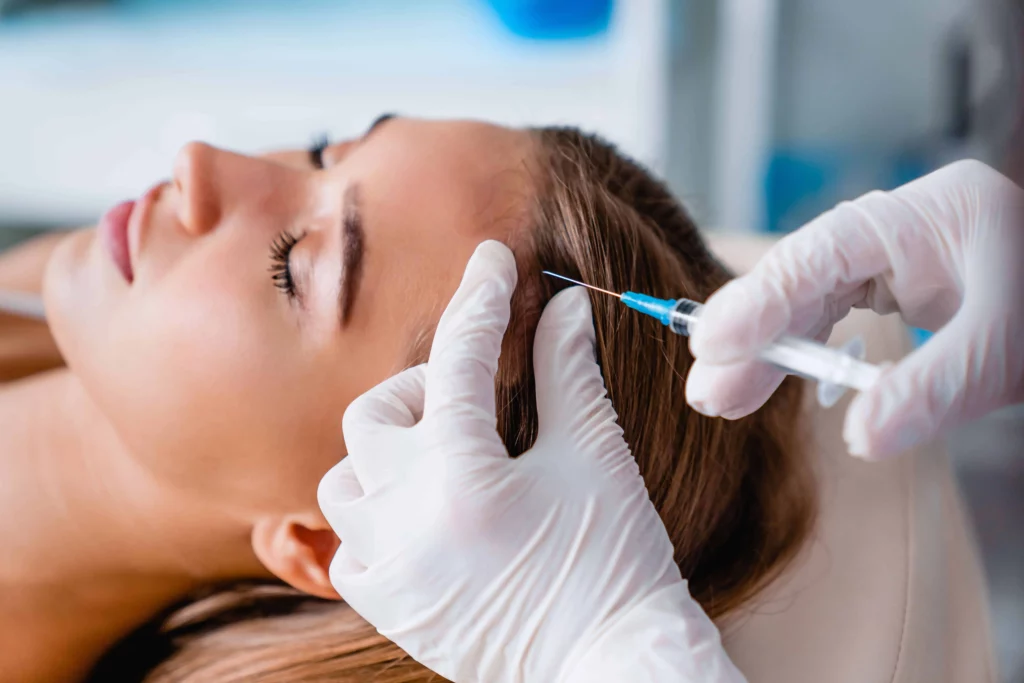
- Step 4: Regenerative In-Clinic Care: Utilizing autologous Growth Factor Concentrate (GFC) or Platelet-Rich Plasma (PRP) injections to nourish hair roots and encourage regrowth.
- Step 5: Monitoring: Tracking reduction in daily hair shedding at 8–12 weeks, with visible density improvements appearing over 4–6 months.
Comparative Guide: Key In-Clinic Procedures
The table below outlines common clinical procedures offered by dermatologists, their mechanisms of action, ideal candidates, and recovery timelines:
| Treatment Category | Mechanism of Action | Ideal Indication | Typical Protocol | Recovery & Downtime |
| Q-Switched Nd:YAG Laser (Laser Toning) | Delivers low-fluence photo-acoustic pulses to fragment melanin without thermal damage. | Dermal melasma, sun tanning, post-acne dark marks, uneven tone. | 4–8 sessions, spaced 2–4 weeks apart. | Minimal downtime; mild redness for 1–2 hours. |
| Medical Chemical Peels | Uses alpha/beta-hydroxy acids to exfoliate damaged skin layers and accelerate cellular turnover. | Comedonal acne, superficial tanning, dull skin texture. | 4–6 sessions, spaced 2–3 weeks apart. | 2–5 days of light flaking; strict sun protection needed. |
| Microneedling RF (MNRF) | Combines insulated micro-needles with radiofrequency energy to stimulate deep collagen production. | Atrophic acne scars, enlarged pores, early skin laxity. | 3–5 sessions, spaced 4–6 weeks apart. | 2–4 days of mild redness and light swelling. |
| GFC / PRP Hair Therapy | Injects autologous growth factors derived from the patient’s blood to nourish dormant hair follicles. | Androgenetic alopecia, hair thinning, telogen effluvium. | 4–6 sessions, spaced 3–4 weeks apart. | Minimal downtime; mild scalp tenderness for 24 hours. |
| Fractional CO2 Laser | Creates microscopic thermal treatment zones to remove damaged tissue and stimulate deep collagen remodeling. | Deep ice-pick or boxcar acne scars, surgical scars, texture issues. | 3–5 sessions, spaced 6–8 weeks apart. | 5–7 days of redness, micro-crusting, and peeling. |
Frequently Asked Questions (FAQs)
1. How do I select among top dermatologists in Hyderabad for my specific skin condition?
Verify that the consultant holds an MBBS followed by an MD or DNB in Dermatology registered with the National Medical Commission. Look for practitioners who have experience treating Indian skin types (Fitzpatrick III–V), utilize US-FDA approved equipment, and provide direct physician-led care.
2. What is the difference between a cosmetologist and a board-certified dermatologist?
A board-certified dermatologist is a medical doctor who completed an MBBS followed by 3 years of postgraduate medical residency (MD or DNB) in skin, hair, and nail pathology. A “cosmetologist” may hold a non-medical diploma or certificate and is not legally qualified to diagnose skin diseases or prescribe prescription medications in India.
3. Why is US-FDA approval crucial for laser treatments on Indian skin?
US-FDA approval confirms that a device has undergone rigorous testing for safety and energy precision. Non-certified devices can deliver inconsistent heat energy, significantly increasing the risk of thermal burns and post-inflammatory hyperpigmentation on darker skin tones.
4. What is the average consultation fee for a skin specialist in Kondapur or HITEC City?
Consultation fees across West Hyderabad’s tech corridors generally range from ₹800 to ₹1,500, depending on the specialist’s experience, clinic location, and diagnostic infrastructure.
5. Can melasma or hyperpigmentation be permanently cured?
Melasma is a chronic pigmentation condition influenced by genetics, hormones, and light exposure. While it cannot be permanently cured, it can be managed effectively through targeted topical treatments, low-fluence laser therapy, and daily broad-spectrum sun protection.
6. Are chemical peels safe for dark Indian skin tones?
Yes, when selected and administered by a qualified dermatologist. Mild to medium-depth peels (such as mandelic, lactic, or low-concentration salicylic acid) are safe for darker complexions. High-strength peels applied by untrained personnel carry a risk of chemical burns and persistent hyperpigmentation.
7. How many sessions are typically required for GFC hair loss therapy?
Most patients require an initial protocol of 4 to 6 sessions spaced 3 to 4 weeks apart. Maintenance sessions may be recommended every 3 to 6 months depending on individual response and underlying hair loss severity.
8. How can I schedule a direct consultation with a qualified dermatologist in West Hyderabad?
You can book a direct diagnostic appointment through official clinic platforms. For instance, Dr. Showrya Gadde’s practice in Kondapur schedules evaluations via drshowryagadde.com or WhatsApp at +91 7599741111.
Final Thoughts: Prioritizing Medical Expertise and Patient Safety
Evaluating options for a top 5 dermatologist in Hyderabad requires looking beyond promotional claims or social media presence. Prioritize formal postgraduate medical credentials (MBBS, MD/DNB Dermatology), verified equipment safety, and physician-led care to protect your skin barrier and long-term health.
Schedule an initial diagnostic consultation to evaluate the practice firsthand. Pay attention to how thoroughly the doctor examines your skin, explains your diagnosis, and answers your questions. Choosing an ethical, evidence-based specialist ensures your skin and hair receive safe, effective, long-term care.

Dr. Showrya Gadde, MBBS, MD (Dermatology), is a board-certified dermatologist and fellowship-trained aesthetic clinician in Kondapur, Hyderabad. She is best known for pico laser, Cosmelan peel, Botox and acne scar treatments. Every treatment she offers is evidence-based and customised for Indian skin.